27 Aug 2026
Britain's Evolving Framework for Random Number Generator Verification in Licensed Digital Gaming Tables

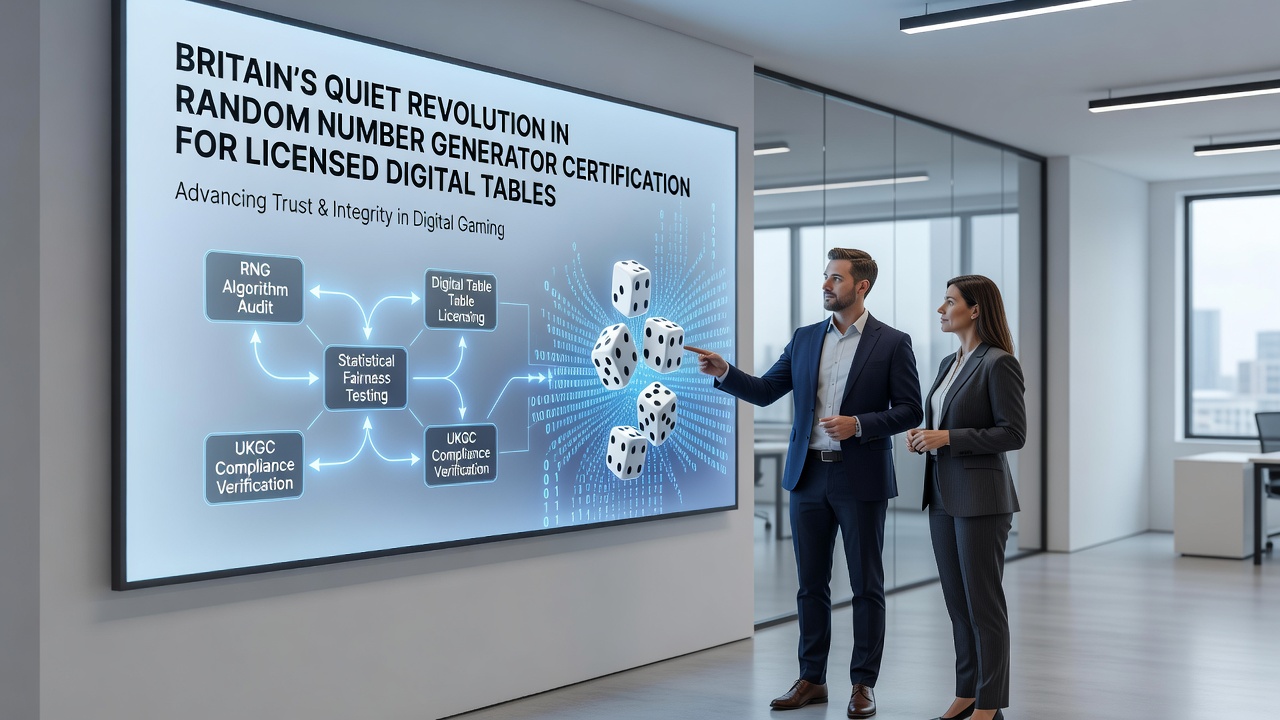
Random number generators form the backbone of fairness in virtual table games offered by licensed operators, and Britain has seen a series of incremental updates to how these systems receive certification. These adjustments focus on digital versions of roulette, blackjack, and baccarat where software must deliver unpredictable outcomes that match physical counterparts. Data from industry reports shows that certification bodies have tightened testing protocols over the past decade, with new benchmarks emerging around statistical independence and resistance to predictive modeling.
Background on Digital Table Game Technology
Virtual table games rely on algorithms that produce sequences of numbers corresponding to card draws or wheel spins, and regulators require these sequences to pass extensive statistical batteries before deployment. Operators integrate RNG modules into platforms that serve UK players, while independent laboratories conduct evaluations covering millions of simulated outcomes. Studies conducted by research institutions indicate that modern certification now includes checks for long-term distribution uniformity alongside short-cycle behavior that might affect individual sessions.
Standards have shifted because computational power allows for more sophisticated analysis, and testing firms now employ advanced tools to detect subtle patterns that earlier methods might have missed. This evolution aligns with broader technological advances in software development, where providers must demonstrate that their RNG implementations remain secure against external interference or internal bias.
Key Updates in Certification Protocols
Certification requirements have incorporated additional layers of scrutiny for entropy sources and post-processing routines, elements that ensure the core randomness remains intact even after algorithmic adjustments. Laboratories evaluate both hardware-based and software-based generators, with particular attention paid to how digital table interfaces interact with the underlying RNG during live play. Figures from regulatory filings reveal that approval timelines have extended slightly as these expanded tests become standard practice.
Focus on Statistical Rigor and Independence
Testing procedures now emphasize cross-validation across multiple jurisdictions, allowing data from one approved market to inform evaluations in others while maintaining local compliance thresholds. Observers note that this collaborative approach reduces duplication yet preserves the specificity needed for British market conditions. In August 2026, several updated test suites are scheduled for rollout, incorporating new metrics for correlation analysis between sequential outputs.
Operators have responded by investing in enhanced documentation and real-time monitoring capabilities that feed directly into certification renewals. These systems track performance metrics continuously, flagging deviations that could trigger re-evaluation even between scheduled audits.
International Perspectives and Comparative Standards
Regulators in other regions provide useful benchmarks for Britain's approach, with the Nevada Gaming Control Board publishing detailed guidelines on RNG evaluation that emphasize both theoretical modeling and empirical sampling. Canadian research centers have contributed peer-reviewed papers examining the application of chaos theory to RNG quality assessment, offering additional methodologies that testing houses have begun to integrate. Australian authorities similarly maintain public resources detailing their certification criteria, highlighting regional variations in acceptable confidence intervals.
These cross-border references help shape British practices without direct adoption, allowing local authorities to refine their own frameworks based on shared technical insights. Industry associations compile comparative reports that track how different markets handle edge cases, such as RNG behavior under high-load conditions or after software updates.
Operational Implications for Licensed Providers
Software developers working with British licensees must now submit expanded test reports that cover integration points between RNG engines and game logic. This includes verification that graphical representations accurately reflect the underlying random sequences without introducing visual biases. Data indicates that providers who maintain in-house testing capabilities alongside third-party audits experience smoother approval cycles.
Renewal processes have incorporated periodic re-sampling requirements, ensuring that deployed systems continue to meet standards throughout their operational lifespan. Those managing digital table portfolios often coordinate with multiple laboratories to balance workload and expertise, particularly when launching new variants that combine RNG elements with live dealer streams.
Conclusion
The changes unfolding in Britain's RNG certification landscape reflect a measured response to advancing technology and player expectations for verifiable fairness. Through updated protocols, international knowledge exchange, and ongoing monitoring, the framework continues to adapt while maintaining consistency across licensed digital table offerings. These developments position the market to handle future innovations in game design without compromising core integrity standards.