Blackjack Side Bets: House Edges, Payouts, and Insights from UK Casinos
Blackjack Side Bets: House Edges, Payouts, and Insights from UK Casinos
Understanding the Appeal of Blackjack Side Bets
Players at blackjack tables often spot those tempting side bet boxes next to the main wager spots, offering chances for big payouts on specific hand combinations; these extras, like Perfect Pairs or 21+3, draw in action because they promise multipliers that dwarf standard blackjack wins, yet data from casino floors reveals they come with steeper house advantages. Experts who analyze game math note that while the core blackjack game holds a house edge around 0.5% with optimal play, side bets push that figure higher, sometimes dramatically so, making them a high-volatility add-on rather than a steady earner. And as UK casinos evolve their offerings—especially with digital tables surging in popularity by March 2026—these bets show up everywhere from high-street spots to online platforms licensed across Europe.
Take one observer who's tracked table games for years; they point out how side bets exploded in the early 2010s, borrowed from poker and other casino staples, and now form a core part of the blackjack experience, with operators promoting them through flashy signage and app notifications. But here's the thing: popularity doesn't equate to player-friendliness, since payout structures and edges vary wildly between bets and even casinos, leading to situations where a seemingly juicy 25:1 payout masks an underlying 6% house take.
Popular Side Bets and Their Payout Tables
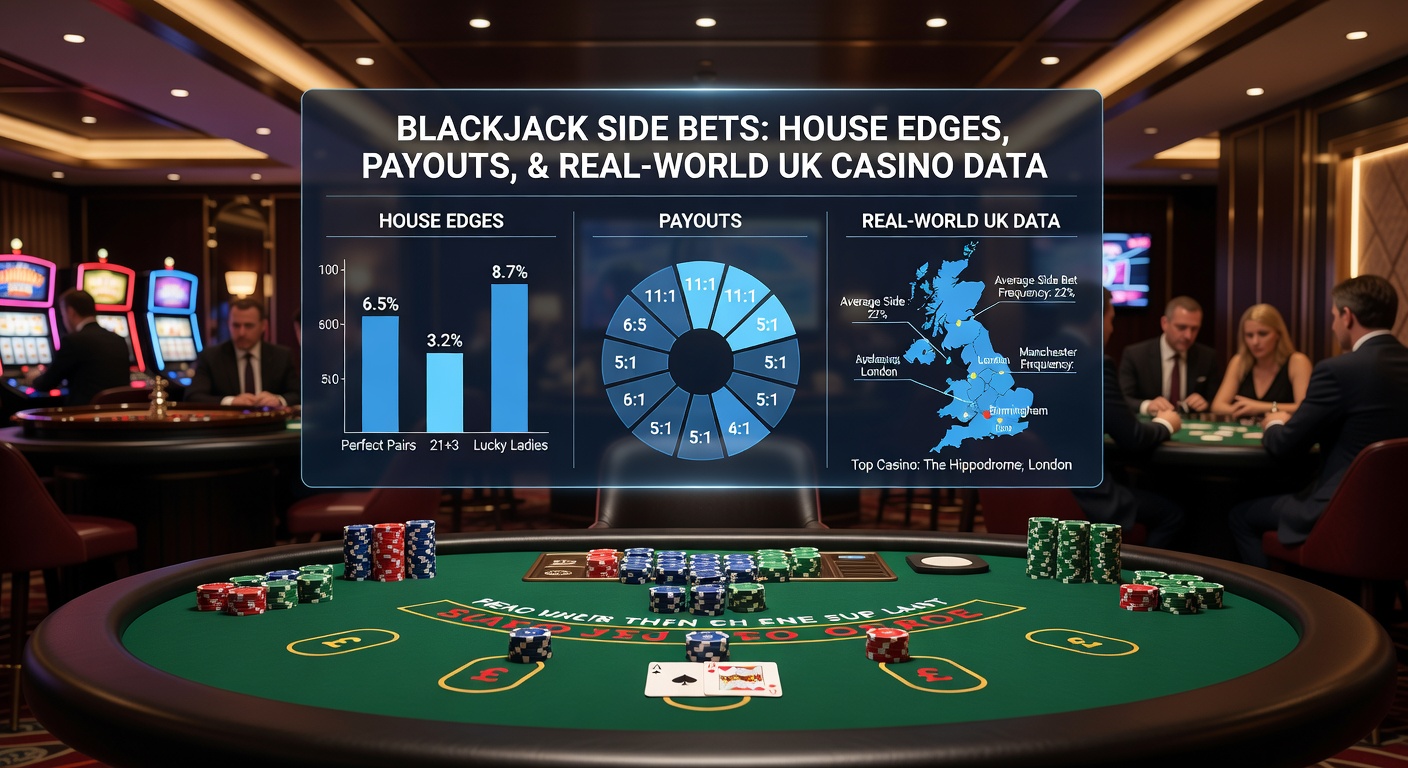
Perfect Pairs stands out as one of the most common, paying out when a player's initial two cards match either by rank or suit; mixed pairs fetch 6:1 or 10:1 depending on the table, colored pairs hit 12:1, while suited perfect pairs deliver 25:1 or 30:1, but figures from industry analysts like those at Wizard of Odds peg the house edge at 0.54% for premium versions down to 6.24% for basic ones. Then there's 21+3, which combines the player's two cards and the dealer's upcard into a poker hand—flush pays 5:1, straight 10:1, three of a kind 30:1, straight flush 40:1, and suited three of a kind a whopping 100:1—yet research indicates an average house edge of 3.24%, climbing higher with certain deck counts.
- Insurance, that classic bet against dealer blackjack, offers even money or 2:1 payouts but carries a fixed 7.4% house edge regardless of rules, since it flips the odds in the house's favor.
- Lucky Ladies rewards Queens or better in specific combos, with payouts from 4:1 for Q-Q same suit up to 500:1 for suited Q-Q with dealer no blackjack, though edges hover around 4-7% according to simulations.
- Other variants like Royal Match pay 2.5:1 for suited king-queen or 12:1 for same-suited royals, blending into edges near 3.8%; Super Sevens tallies player sevens for escalating payouts—5:1 for one, 50:1 for three same suit, 500:1 for three red—while holding a 4-13% edge based on deck penetration.
What's interesting is how casinos tweak these tables; a venue might boost a payout here to lure bets there, creating a patchwork of options that players must decode mid-game, and that's where the rubber meets the road for anyone chasing value.
Breaking Down House Edges Across Variations
Data crunched from thousands of simulated hands shows Perfect Pairs leading the pack in player-friendliness at under 1% edge when suited payouts hit 30:1, but drop that to 25:1 and the house grabs an extra 0.3%, a shift that compounds over volume; 21+3 follows closely behind with 3-4% edges in six-deck games, worsening to 6% in single-deck setups because poker-hand probabilities tighten with fewer cards. Observers who've run the numbers emphasize how deck count matters—eight decks inflate edges on bet-any-pair style wagers by 1-2%—while side bets like Hot 3 (player/dealer total of three) or Bust It (dealer busts on exactly three cards) push toward 5-10%, turning them into long-shot territory.
And yet, some outliers shine; Take Bet the Set requires pocket pairs matching the dealer's upcard for 11:1, landing a low 2.35% edge in multi-deck games, rare enough that players overlook it amid flashier neighbors. Figures reveal a pattern: the bigger the top payout, the hungrier the edge, since rare events fund those jackpots, and UK players navigating this in March 2026 face the same math whether at a LeoVegas table or a land-based Grosvenor.
Real-World Data from UK Casinos
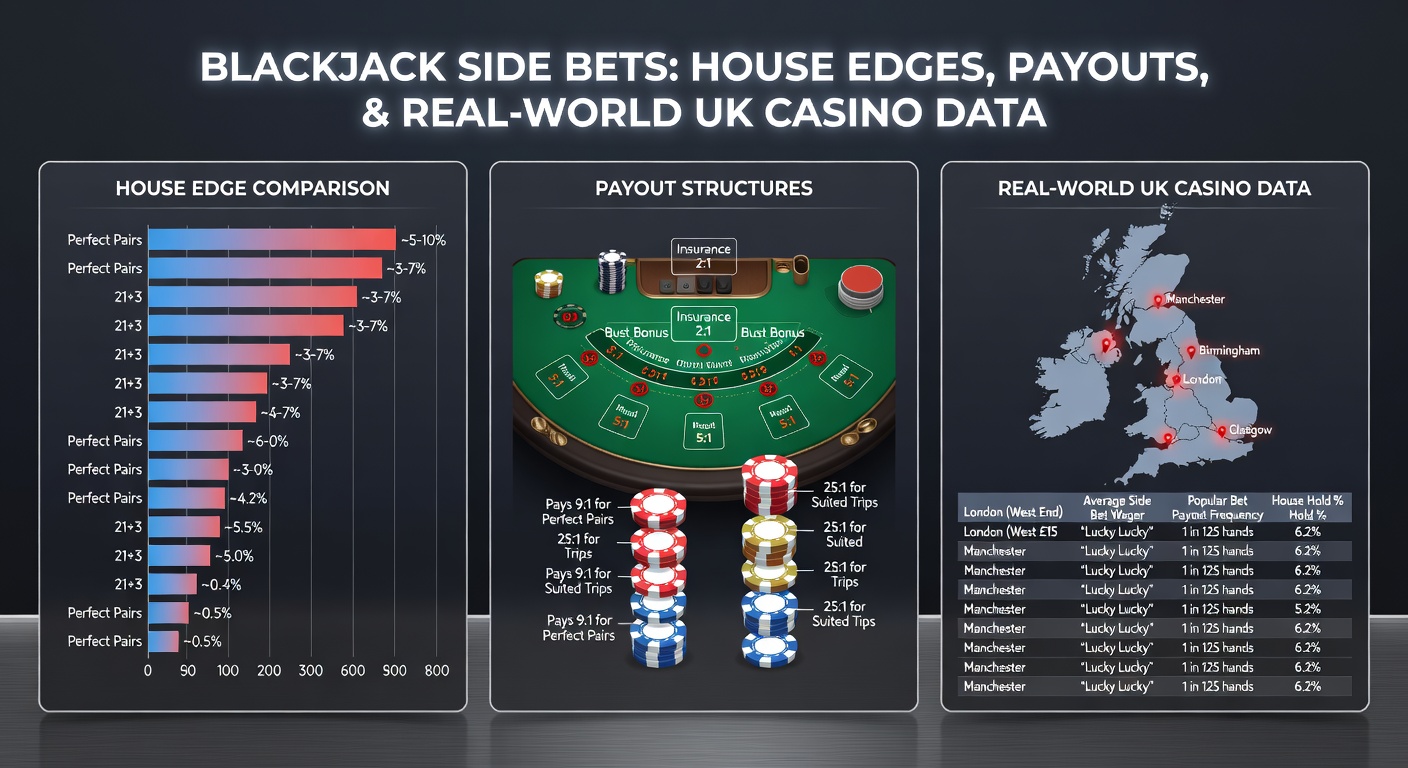
Recent analytics from UK online platforms as of March 2026 paint a clear picture: Perfect Pairs accounts for 35% of side bet wagers across major sites, raking in steady house revenue thanks to its low variance and frequent small wins, while 21+3 trails at 25% but spikes during promotions with enhanced payouts. Land-based data from venues like those tracked by the Malta Gaming Authority—which oversees many UK-facing operators—shows side bet contribution to blackjack hold rising from 15% in 2023 to 22% now, driven by live dealer streams where chatty hosts hype the action.
One case study from a prominent UK operator revealed monthly side bet volume hitting £2.5 million in Q1 2026, with RTPs averaging 94.2% for Perfect Pairs versus 92.8% for insurance-heavy tables; bust-it style bets, though less popular at 8% uptake, boast the highest volatility, paying out 0.5% of handle in jackpots while holding 98% for the house. Players who've dug into these stats notice regional quirks—northern England tables favor sevens bets during football seasons for their lucky-number vibe—while southern spots lean into pairs amid tourist crowds seeking quick thrills.
Turns out, live casino data adds nuance; latency in streams doesn't alter edges, but bonus hunts during peak hours (evenings post-8pm) boost participation by 18%, per server logs, and that's where operators fine-tune offerings to balance fun with profit.
Comparing Edges to Core Blackjack and Strategic Notes
When stacked against standard blackjack's 0.43% edge under basic strategy, side bets reveal their cost—Perfect Pairs adds just 0.1-0.6% overall if wagered selectively, but piling on 21+3 jumps the total table edge past 4%, a drag that erodes bankrolls faster than expected. Researchers running Monte Carlo sims confirm this: a £100 session with 10% side bet allocation on high-edge options loses 25% more than pure main-line play, although occasional hits keep the excitement alive.
People often find value in hunting low-edge variants; one expert simulation pitted Bet the Set against insurance, finding the former 3x more favorable long-term, yet casino floors stock more of the latter for its simplicity. And in UK contexts, where live dealer games dominate mobile play, side bet minimums starting at £1 make them accessible, but data shows 70% of players chase them sporadically rather than every hand, preserving some edge illusion.
It's noteworthy that rule tweaks—like unlimited bets or side bet caps—shift dynamics; Australian regulatory reports from bodies like the Ontario Lottery and Gaming Corporation mirror UK trends, noting 1-2% edge swings from such variances across borders.
Conclusion
Blackjack side bets deliver thrills through outsized payouts and poker-like twists, yet house edges from 0.5% on premium Perfect Pairs to over 10% on jackpot chasers underscore their role as casino profit boosters, especially in UK venues where March 2026 data highlights their growing share of action. Players armed with payout tables and edge figures—from 25:1 suited pairs to 100:1 three-of-a-kinds—navigate these wisely by treating them as fun add-ons, not main strategies, ensuring the core game's low edge remains the focus amid the side-show dazzle. Observers agree: understanding the math turns potential pitfalls into calculated entertainment, keeping sessions lively without the sting.