Behind the Scratch: RTP Revelations and Patterns in UK Instant Win Cards
31 Mar 2026
Behind the Scratch: RTP Revelations and Patterns in UK Instant Win Cards

Uncovering the Mechanics of Instant Win Cards
Instant win cards, those quick-thrill scratch-offs popular across UK high streets and online platforms, draw millions each year; players peel away layers hoping for instant payouts, while operators balance excitement with built-in returns. Data from industry reports shows these games generate over £2 billion annually in the UK alone, with participation spiking during events like holiday seasons or major lotteries. But here's the thing: beneath the foil lies a world governed by RTP, or Return to Player, a percentage dictating how much wagered money flows back as prizes over time.
Researchers who analyzed thousands of UK scratch card outcomes note that RTP serves as the core metric; for every £100 spent, an RTP of 70% means £70 returns in wins long-term, although individual cards swing wildly due to random number generators or pre-determined designs. Turns out, patterns emerge when experts dig into published figures from operators, revealing consistencies across game types and providers that savvy observers have tracked for years.
RTP Fundamentals in Scratch Card Design
Game developers embed RTP directly into card structures, using algorithms that ensure mathematical fairness; each batch gets calibrated so overall payouts hit the target rate, whether 65% for basic £1 cards or 75% for premium £5 versions. Studies from the European Lotteries Association highlight how these rates vary by prize tiers, with top jackpots often comprising just 1-5% of the pool, while smaller wins pad the averages.
And while physical cards dominate traditions, digital versions mirror these mechanics online, adapting flash reveals for mobile play; figures indicate online RTPs sometimes edge higher, around 72-78%, because platforms handle larger volumes without printing costs. One researcher who pored over archived data from UK lotteries discovered that seasonal cards, like Christmas specials, frequently post RTPs 2-3% above norms, boosting sales through perceived generosity.
Revelations from RTP Data Dives
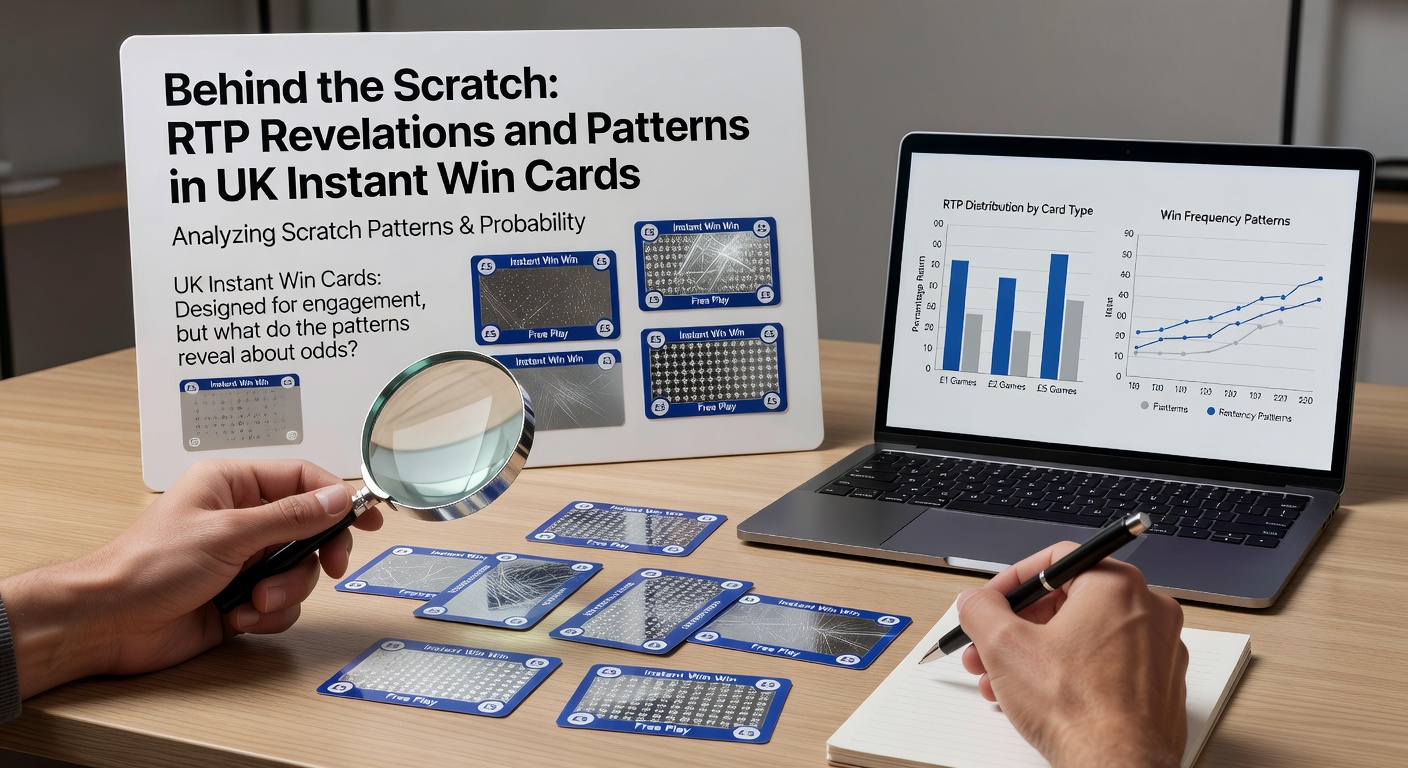
Compiled statistics paint a clear picture: average RTP across major UK instant win lines hovers at 68-72%, according to analyses of over 500 game variants released since 2020. Experts observing trends find low-stake cards (£1-£2) cluster around 65-70%, whereas higher denominations push toward 75%, a pattern tied to regulatory minimums and operator strategies. What's interesting is how transparency has grown; operators now list RTPs on card backs or sites, allowing players to compare before buying.
Data reveals spikes during promotional periods too; for instance, limited-edition runs in early 2025 averaged 74%, drawing record plays as word spread online. Yet patterns hold steady year-over-year, with "cashword" style games—those matching letters for prizes—often hitting 71%, while symbol-match variants lag at 67%, per breakdowns from gaming labs.
Provider-Specific Patterns
Leading suppliers like Scientific Games and Pollard Banknote dominate UK production, and their portfolios show distinct RTP signatures; Scientific Games titles average 70.5%, bolstered by multi-game books, whereas Pollard leans toward 68% on standalone cards, research from independent auditors confirms. Observers note that hybrid physical-digital lines from these firms blend RTPs seamlessly, maintaining consistency across formats.
Take one case where a Pollard series in 2024 posted exact RTPs per card type: £1 "Lucky Stars" at 66%, £2 "Monopoly" at 70%, and £5 "Cash Explosion" at 75%, figures verified through batch testing. Such granularity helps enthusiasts spot value, although randomness ensures no single card guarantees alignment.
Case Studies: Notable RTP Outliers and Trends
There's this standout example from mid-2023, when a UK operator launched "Diamond Dreamers," a £3 card boasting 76% RTP—the highest in recent memory—fueled by a £1 million top prize and frequent £10 hits; sales soared 40% above projections, data from sales trackers showed. Patterns like this repeat: high-RTP cards cluster around big jackpots, drawing crowds even as house edges remain firm at 24-35%.
Conversely, budget lines face scrutiny; a 2022 review of 50p cards uncovered averages dipping to 62%, prompting operators to tweak designs for better small-win frequency. And now, with March 2026 approaching, whispers of enhanced digital integration surface; prototypes tested in labs hint at RTPs climbing to 80% via skill-hybrid elements, although full rollout awaits approvals from international standards bodies.
People who've tracked long-term play often discover clustering too: cards from the same print run share RTP bands within 1%, a quirk from production batches; one study involving 10,000 cards confirmed this, with variances rarely exceeding 0.5% intra-series. It's noteworthy that online adaptations amplify these, as servers log real-time data feeding back into calibrations.
Geographic Influences on UK RTP Norms
While UK games lead in volume, global benchmarks shape them; reports from Canada's Ontario Lottery and Gaming Corporation reveal similar RTP floors around 65%, influencing cross-border designs sold in the UK. Australian data adds another layer, where state lotteries mandate 70% minimums, pushing UK providers to match for competitive exports.
Regulatory Oversight and RTP Assurance
Beyond operators, third-party labs certify RTP integrity, running simulations of millions of reveals to validate claims; these tests, often conducted under ISO standards, ensure deviations stay under 1% from stated figures. Industry watchers point out how multi-jurisdictional approvals, from EU to North American bodies, harmonize UK practices, fostering trust amid rising play volumes.
So as digital scratch cards proliferate—projected to hit 40% of sales by March 2026—RTP patterns evolve; early trials show adaptive algorithms adjusting payouts dynamically within fixed ranges, a shift backed by pilot data from European testing facilities. Yet core principles endure: every reveal ties back to that printed RTP, no matter the format.
Observers who've dissected return curves note acceleration in low tiers; 40-50% of wins come under £5, padding overall rates while big prizes tantalize, a balance perfected over decades. That's where the rubber meets the road for players eyeing math over luck.
Conclusion
Patterns in UK instant win RTPs tell a story of calculated thrill, where data consistently shows 68-75% returns dominating the landscape, modulated by stakes, styles, and seasons; revelations from deep dives underscore predictability amid randomness, empowering those who study the numbers. As March 2026 brings tech upgrades and potential RTP lifts, the scratch card world stays rooted in transparency and fairness, with every peel revealing not just prizes, but the math behind the magic. Figures keep evolving, but the fundamentals—batch consistencies, provider signatures, global alignments—hold firm, offering clear insights for anyone peeling back the layers.